
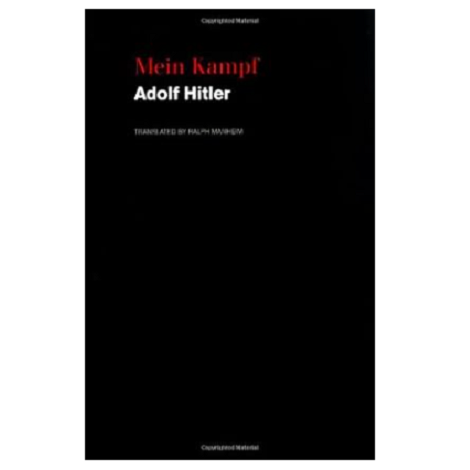
Mein Kampf is one of the most controversial and historically significant political texts of the 20th century. Written by Adolf Hitler during his imprisonment in the 1920s, the book outlines his early ideological beliefs, political worldview, and plans for Germany’s future.
Today, the book is studied primarily as a historical and ideological document rather than a literary or philosophical achievement. It is closely associated with the rise of Nazism, World War II, and the Holocaust, making it essential for understanding how extremist ideologies can develop and influence political systems.
This review provides a critical, academic examination of the book’s structure, themes, rhetorical style, historical impact, and ethical implications.
Historical Context: Writing in a Period of Political Extremism
Mein Kampf was written during a turbulent period in German history following World War I. Germany was experiencing:
- Economic instability
- Political fragmentation
- Social unrest
- National humiliation under the Treaty of Versailles
In this environment, extremist ideologies gained traction across the political spectrum.
Hitler wrote the book while imprisoned after a failed political coup. During this time, he began formulating his ideas about nationalism, race, propaganda, and authoritarian governance.
Understanding this context is important because the book is not a neutral philosophical treatise; it is deeply rooted in political anger, resentment, and ideological radicalization.
Structure and Writing Style: Ideology Over Literary Merit
From a literary perspective, Mein Kampf is widely regarded as poorly structured and repetitive. The writing is:
- Dense and repetitive
- Emotionally charged rather than analytical
- Ideologically driven rather than logically balanced
The book is divided into two main volumes:
- Personal autobiography and early experiences
- Political ideology and future vision
However, the narrative is not linear or carefully organized. Instead, it reflects a stream of ideological justification and personal interpretation of events.
The style prioritizes persuasion over clarity, often using emotional language and sweeping generalizations.
Core Ideological Themes (Analytical Overview)
The book presents several ideological concepts that later became central to Nazi ideology.
1. Extreme Nationalism
Hitler emphasizes the idea of national unity based on ethnic identity, promoting the belief that Germany must be unified under a single political and cultural vision.
2. Racial Hierarchy
One of the most controversial aspects of the book is its racial ideology, which promotes a hierarchical view of human populations. These ideas later formed part of Nazi racial policies.
3. Anti-Semitic Propaganda
The text contains explicit anti-Semitic rhetoric that contributed to harmful stereotypes and political persecution. This aspect is widely condemned today and recognized as part of extremist propaganda.
4. Leadership and Authority
Hitler advocates for strong centralized leadership and criticizes parliamentary democracy, favoring authoritarian governance.
5. Propaganda and Mass Influence
The book discusses the use of propaganda as a political tool, emphasizing emotional appeal over rational debate.
These themes collectively form the ideological foundation that influenced Nazi political strategy.
Propaganda and Psychological Framing
One of the most important aspects of Mein Kampf is its use as a propaganda tool. Rather than presenting balanced arguments, the book:
- Appeals to emotion rather than logic
- Simplifies complex political issues
- Creates “us vs. them” narratives
- Reinforces ideological certainty
Modern scholars analyze the text to understand how propaganda can shape public perception and mobilize political movements.
The book demonstrates how language can be used to construct ideological identity and justify political extremism.
Historical Impact and Consequences
The most significant aspect of Mein Kampf is not its literary value but its historical consequences.
The ideas expressed in the book later influenced:
- The rise of the Nazi Party
- The policies of Nazi Party
- World War II
- The Holocaust
Because of this, the book is often studied in history, political science, and ethics courses as an example of how extremist ideology can evolve into state policy.
It serves as a cautionary document illustrating the dangers of unchecked nationalism, propaganda, and authoritarian thinking.
Ethical Considerations in Studying the Book
Studying Mein Kampf requires careful ethical framing. It is not read for inspiration but for:
- Historical understanding
- Ideological analysis
- Educational purposes
- Prevention of extremist repetition
Educators and historians emphasize that the book must be approached critically and contextually, not as a guide for political thought.
Its study is important precisely because of the harm associated with the ideologies it represents.Strengths (From an Analytical Perspective)
It is important to clarify that “strengths” here refer to analytical significance, not endorsement.
- Provides insight into extremist ideology formation
- Helps understand propaganda techniques
- Offers historical context for 20th-century Europe
- Useful for academic study of political radicalization
Limitations and Critical Evaluation
From a scholarly perspective, the book has significant limitations:
1. Lack of Intellectual Rigor
The arguments are not supported by systematic evidence or balanced reasoning.
2. Ideological Bias
The content is heavily shaped by personal and political ideology.
3. Poor Literary Quality
The writing lacks clarity, structure, and analytical depth.
4. Ethical Harm
The ideological content contributed historically to severe human suffering and is widely condemned.
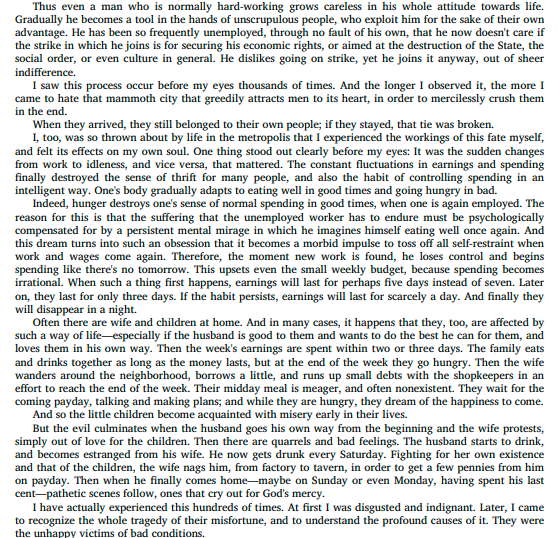
Why the Book Is Still Studied Today
Despite its controversial nature, Mein Kampf remains a subject of academic study because it:
- Helps understand historical extremism
- Provides insight into propaganda techniques
- Illustrates how ideology influences political systems
- Serves as a warning against authoritarianism
It is studied not for admiration but for critical awareness and historical education.
Final Verdict: A Dangerous Ideological Text with Major Historical Significance
Mein Kampf by Adolf Hitler is not a literary masterpiece or philosophical work in the traditional sense. It is an ideological document that played a role in shaping one of the darkest periods in modern history.
Its importance today lies entirely in its historical and educational value. It serves as a case study in how extremist ideas can be formed, spread, and translated into political action.
The book must always be approached with critical awareness, historical context, and ethical responsibility.
Overall Evaluation (Academic Perspective)
A historically significant but deeply controversial ideological text used today primarily for critical study of propaganda, extremism, and authoritarian political systems.
Available Formats
EPUB

Related posts:
 The Lioness of Boston by Emily Franklin PDF Download
 Wings of Fire by Abdul A.P.J. Kalam & Arun Tiwari PDF Download
 Steve Jobs by Walter Isaacson PDF Download
 American Royals by Katharine McGee PDF Download
 Crosshairs by Catherine Hernandez PDF Download
 The Tea Girl of Hummingbird by Lane Lisa See PDF Download
 Harry Potter and the Goblet of Fire by K. Rowling PDF Download
 If I Never Met You by Mhairi McFarlane PDF Download
 In the Unlikely Event by L.J. Shen PDF Download
 Bringing Down the Duke by Evie Dunmore PDF Download