
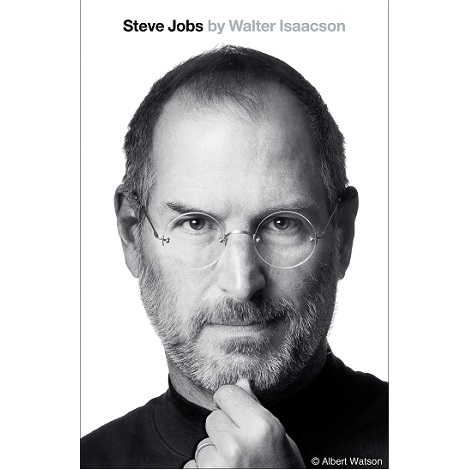
Biographies often attempt to simplify extraordinary individuals into inspirational figures or cautionary tales. Steve Jobs by Walter Isaacson avoids both extremes. Instead, it presents a detailed, balanced, and deeply human portrait of one of the most influential and controversial innovators of the modern era: Steve Jobs.
Based on extensive interviews with Jobs himself, along with conversations involving family members, colleagues, competitors, and friends, the biography offers an unusually intimate examination of a man whose brilliance transformed technology, entertainment, design, and communication.
What makes this biography compelling is not simply the scale of Jobs’ accomplishments, but the contradictions within his personality. He emerges as visionary yet difficult, charismatic yet emotionally harsh, deeply intuitive yet often irrational. Isaacson does not attempt to sanitize these contradictions. Instead, he allows them to define the narrative, creating a portrait that feels intellectually honest and psychologically layered.
The result is one of the most important business and technology biographies of the twenty-first century—a book that explores not only innovation and entrepreneurship, but also ambition, obsession, perfectionism, and the personal costs of genius.
A Biography Built Around Complexity Rather Than Myth
One of the biography’s greatest achievements is its refusal to reduce Steve Jobs into a simplistic heroic figure.
Popular culture often portrays successful innovators as either flawless visionaries or ruthless egotists. Isaacson presents Jobs as both transformative and deeply flawed. This balanced approach gives the biography credibility and emotional depth.
Throughout the narrative, Jobs appears:
- Brilliantly creative
- Intensely demanding
- Emotionally volatile
- Perfectionistic
- Inspiring and manipulative simultaneously
This complexity is essential because it mirrors the reality of leadership in highly competitive creative industries.
Isaacson repeatedly demonstrates that many of Jobs’ greatest strengths—his obsession with excellence, refusal to compromise, and relentless focus—were inseparable from qualities that made him personally difficult.
Rather than offering moral judgment, the biography encourages readers to wrestle with these contradictions themselves.
Early Life and Identity Formation
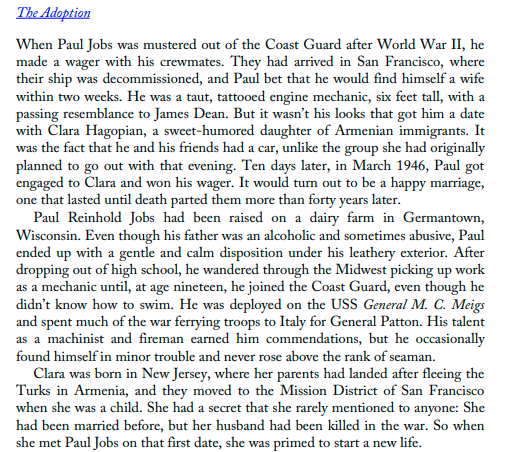
The biography begins by exploring Jobs’ childhood, adoption, and formative experiences in California’s emerging technology culture.
Isaacson carefully traces the influences that shaped Jobs’ worldview:
- His adoption and feelings of abandonment
- Countercultural influences of the 1960s and 1970s
- Spiritual exploration and Zen Buddhism
- Fascination with simplicity and design
- Exposure to engineering culture in Silicon Valley
These early experiences become foundational to Jobs’ later philosophy of technology and creativity.
One particularly insightful aspect of the biography is its examination of Jobs’ obsession with control and perfection. Isaacson suggests that these traits were connected not only to business ambition but also to deeper psychological insecurities and identity struggles.
This psychological dimension elevates the biography beyond standard business storytelling.
Apple and the Creation of Modern Consumer Technology
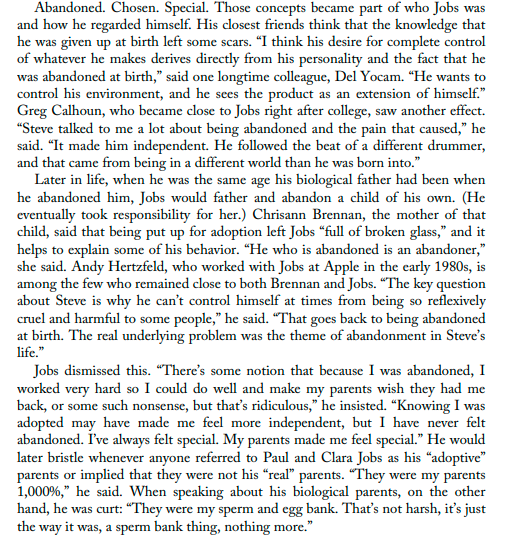
The central narrative of the biography revolves around Jobs’ relationship with Apple and his role in transforming personal technology.
Isaacson chronicles the development of groundbreaking products including:
- Apple II
- Macintosh
- iPod
- iPhone
- iPad
The biography effectively demonstrates that Jobs was not primarily an engineer. His genius lay in:
- Product vision
- User experience design
- Branding
- Integration of technology and art
- Anticipating consumer behavior
Isaacson repeatedly highlights Jobs’ belief that technology should feel intuitive, elegant, and emotionally engaging.
This philosophy reshaped not only Apple but the entire technology industry.
Leadership Style: Visionary and Brutal
One of the most debated aspects of Steve Jobs’ legacy is his leadership style, and Isaacson examines it with considerable nuance.
Jobs is portrayed as:
- Intensely demanding
- Often harsh toward employees
- Uncompromising in standards
- Capable of emotional manipulation
- Exceptionally motivating
The biography includes numerous examples of Jobs humiliating colleagues, rejecting ideas aggressively, and creating high-pressure work environments.
Yet many former employees also describe him as uniquely inspiring because he pushed teams beyond perceived limitations.
Isaacson avoids simplistic conclusions about whether this leadership style was justified. Instead, he explores the ethical and practical tensions between creativity, excellence, and humane management.
This balanced treatment is one of the biography’s strongest intellectual qualities.

Innovation Through Obsession
A recurring theme throughout the book is Jobs’ obsession with perfection and simplicity.
He believed products should:
- Be visually elegant
- Feel emotionally satisfying
- Function intuitively
- Integrate hardware and software seamlessly
This obsessive attention to detail extended even to aspects invisible to consumers, such as internal circuit board design.
Isaacson illustrates how Jobs approached innovation not merely as technological advancement but as artistic expression.
This intersection of technology and art becomes central to understanding Jobs’ broader cultural impact.
The biography persuasively argues that Jobs succeeded because he combined:
- Creative intuition
- Design sensitivity
- Marketing brilliance
- Strategic ruthlessness
in ways rarely seen in business history.
Pixar and Reinvention
An especially compelling section of the biography covers Jobs’ acquisition and transformation of Pixar.
Initially considered a risky investment, Pixar eventually revolutionized animated filmmaking through movies such as:
- Toy Story
- Finding Nemo
- The Incredibles
This period is important because it demonstrates Jobs’ ability to evolve. Isaacson shows that Pixar softened some of Jobs’ harsher tendencies by exposing him to collaborative creative cultures different from Apple’s combative environment.
The Pixar chapters broaden the biography beyond technology, showing Jobs’ influence on entertainment and storytelling.
Personal Relationships and Emotional Distance
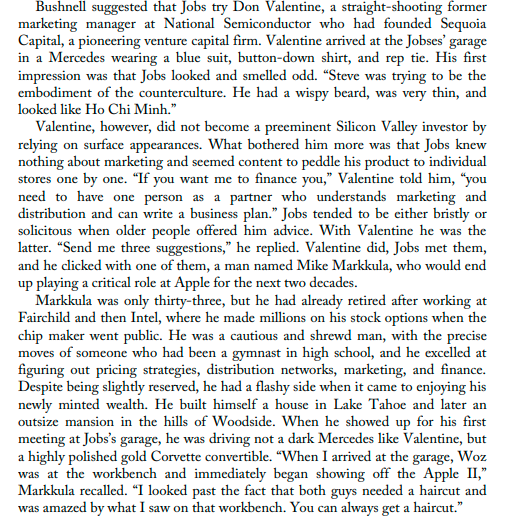
While the biography strongly covers Jobs’ professional achievements, it also examines his personal relationships with notable honesty.
Isaacson does not avoid difficult topics such as:
- Jobs’ strained relationships
- Emotional detachment
- Paternity denial regarding his daughter Lisa
- Family conflicts
- Control-oriented behavior
These sections humanize Jobs while also complicating admiration for him.
One of the biography’s most effective qualities is its refusal to separate professional genius from personal behavior. Instead, Isaacson suggests that the same traits fueling innovation also contributed to emotional difficulties in relationships.
This complexity makes the narrative psychologically compelling.
Writing Style and Narrative Structure
Walter Isaacson’s writing style is clear, journalistic, and highly accessible.
The biography benefits from:
- Strong chronological structure
- Extensive interview-based detail
- Balanced narrative tone
- Effective integration of technical and personal material
Isaacson avoids overly academic language while still maintaining analytical depth.
His approach allows readers with little technological background to understand the significance of Apple’s innovations and Jobs’ role in shaping them.
The pacing remains engaging despite the book’s considerable length because Isaacson balances:
- Business history
- Psychological insight
- Cultural analysis
- Personal drama
effectively throughout the narrative.
Themes Explored in the Biography
1. Innovation and Creativity
The biography examines how groundbreaking innovation often emerges from unconventional thinking and relentless standards.
2. Perfectionism
Jobs’ obsession with perfection becomes both his greatest strength and greatest flaw.
3. Technology and Humanity
The book repeatedly explores the relationship between human emotion and technological design.
4. Leadership and Ethics
Isaacson raises important questions about whether exceptional achievement excuses difficult behavior.
5. Mortality and Legacy
The later chapters become increasingly reflective as Jobs confronts illness, mortality, and the meaning of his life’s work.
Strengths of the Biography
- Deep psychological insight
- Balanced portrayal of Jobs
- Excellent business and technological analysis
- Engaging narrative structure
- Strong historical significance
- Rich interview-based detail
Limitations and Critical Perspective
A balanced review should also acknowledge certain limitations.
1. Heavy Focus on Jobs’ Perspective
Because Isaacson had unusual access to Jobs himself, some critics argue the narrative occasionally privileges Jobs’ interpretations of events.
2. Limited Technical Depth
Readers seeking highly technical analysis of computing innovation may find the technological discussions somewhat simplified.
3. Emotional Distance
Despite extensive detail, some emotional aspects of Jobs’ inner life remain elusive.
However, these limitations are relatively minor within such a comprehensive work.
Cultural and Historical Importance
Steve Jobs has become one of the defining business biographies of the modern era because it captures the intersection of:
- Technology
- Design
- Media
- Entrepreneurship
- Global consumer culture
The biography also serves as a historical record of Silicon Valley’s transformation into a dominant global force.
Its influence extends beyond business readers to anyone interested in creativity, leadership, innovation, and modern culture.
Final Verdict: A Brilliant and Unflinching Portrait of Innovation
Steve Jobs by Walter Isaacson is an exceptional biography because it embraces complexity rather than simplifying it.
The book portrays Steve Jobs as a visionary capable of reshaping industries and redefining consumer technology, while also acknowledging the personal flaws and emotional costs intertwined with that brilliance.
Isaacson’s balanced approach prevents the biography from becoming either corporate mythology or character assassination. Instead, it succeeds as a thoughtful exploration of ambition, creativity, leadership, and human contradiction.
For readers interested in technology, entrepreneurship, psychology, or modern cultural history, this biography remains essential reading.
Available Formats
EPUB
Book Innformation In Point
- Title: Steve Jobs
- Author: Walter Isaacson
- Genre: Biography / Business / Technology / Non-fiction Biographies of Science & Technology Leaders Biographies of Business & Industrial Professionals
- Writing Style: Analytical, journalistic, detailed, engaging
- Main Subject: The life, career, leadership, and innovations of Steve Jobs
- Key Themes: Innovation, creativity, leadership, perfectionism, ambition, technology, design
- Tone: Insightful, balanced, reflective, inspirational
- Time Period Covered: Steve Jobs’ childhood through his final years
- Setting: Silicon Valley, Apple, Pixar, and the global technology industry
- Target Audience: Entrepreneurs, business readers, technology enthusiasts, students, and general readers
- Notable Strengths: Deep research, psychological insight, balanced portrayal, strong narrative structure
- Reading Experience: Informative, inspiring, and intellectually engaging
- Global Impact: One of the most influential modern business biographies ever written
Download Method Steve Jobs by Walter Isaacson
By Clicking on the below download button, you will initiate the downloading process of Steve Jobs by Walter Isaacson.The book is available in both ePub and PDF format with a single click, moreover we offer unlimited books for downloading without any spams, bombardment of ads. Flyers and needless links. Your support in regard to sharing with friends, family members, colleagues are always welcome. Do not forget to share your ideas and thoughts in the comment section.
You may also like
Wings of Fire by Abdul A.P.J. Kalam & Arun Tiwari PDF Download
Long Walk to Freedom by Nelson Mandela PDF Download
The Diary of a Young Girl by Anne Frank PDF Download
Driven to Distraction by Edward M. Hallowell M.D & John J. Ratey M.D PDF Download

Related posts:
 The Lioness of Boston by Emily Franklin PDF Download
 Wings of Fire by Abdul A.P.J. Kalam & Arun Tiwari PDF Download
 American Royals by Katharine McGee PDF Download
 Crosshairs by Catherine Hernandez PDF Download
 The Tea Girl of Hummingbird by Lane Lisa See PDF Download
 Harry Potter and the Goblet of Fire by K. Rowling PDF Download
 If I Never Met You by Mhairi McFarlane PDF Download
 In the Unlikely Event by L.J. Shen PDF Download
 Bringing Down the Duke by Evie Dunmore PDF Download
 A Rogue of One’s Own by Evie Dunmore PDF Download