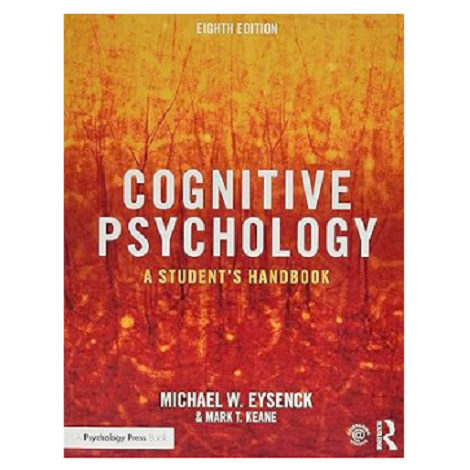
Few textbooks in modern psychology have achieved the academic reputation and long-lasting influence of Cognitive Psychology by Michael W. Eysenck and Mark T. Keane. Widely used in universities across the world, the book has become a foundational resource for students, educators, and researchers interested in understanding the scientific study of the human mind.
Cognitive psychology is concerned with how people perceive, think, remember, solve problems, process language, and make decisions. Eysenck and Keane approach these topics with remarkable depth, presenting both classical theories and modern developments in a highly organized academic framework.
Unlike many introductory psychology texts that prioritize simplicity over substance, this book attempts to provide a rigorous and research-oriented understanding of cognition while remaining accessible to serious learners. The result is a textbook that is intellectually rich, analytically balanced, and deeply respected within academic psychology.
Structure and Organization: Designed for Systematic Learning
One of the book’s strongest features is its exceptionally clear organization. The authors divide complex cognitive processes into carefully structured chapters that gradually build the reader’s understanding.
The book typically covers major areas such as:
- Attention and perception
- Memory systems
- Language and comprehension
- Mental imagery
- Thinking and reasoning
- Problem-solving
- Decision-making
- Cognitive neuroscience
- Consciousness and emotion
Each chapter follows a logical academic pattern:
- Introduction to the topic
- Major theories and models
- Experimental evidence
- Critical evaluation
- Contemporary research developments
This structure is particularly valuable because it teaches students not only what psychologists believe, but also why they believe it and how scientific conclusions are formed.
The progression of topics feels deliberate and intellectually coherent. Earlier chapters establish core concepts that later chapters expand upon, creating a cumulative learning experience rather than disconnected units of information.
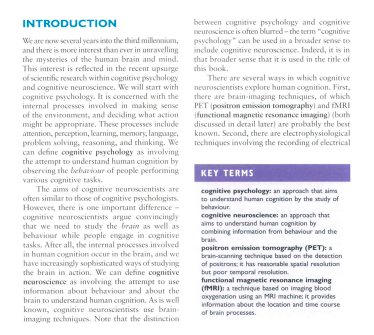
Writing Style: Academic Yet Understandable
A major challenge for psychology textbooks is balancing scientific depth with readability. Eysenck and Keane succeed better than most in achieving this balance.
The writing style is formal and scholarly but not unnecessarily difficult. Technical terminology is introduced carefully, and most concepts are explained with practical examples and references to real experiments.
Unlike casual popular psychology books, this text does not oversimplify cognitive science. Readers are expected to think critically, engage with theories, and understand competing perspectives. However, the authors avoid dense academic language whenever possible, making the book manageable even for motivated beginners.
What makes the writing especially effective is its analytical tone. The authors do not merely present theories as facts. Instead, they frequently discuss:
- Supporting evidence
- Weaknesses of theories
- Contradictory findings
- Ongoing debates in the field
This approach encourages intellectual independence and scientific thinking.
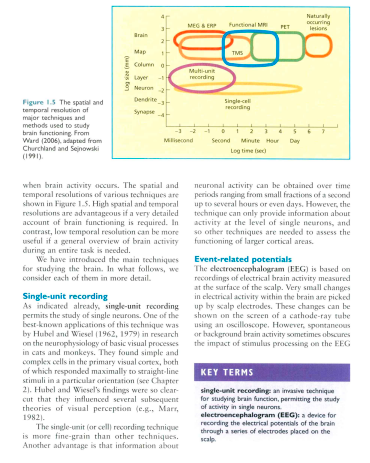
Depth of Research and Scientific Credibility
Perhaps the book’s greatest achievement is its extraordinary research foundation. Eysenck and Keane integrate decades of experimental findings into a coherent narrative about human cognition.
The book references numerous landmark studies in cognitive psychology and cognitive neuroscience. Rather than relying on broad summaries alone, the authors often explain the methodology and significance of key experiments.
For example, when discussing memory, the book explores:
- Multi-store memory models
- Working memory theory
- Episodic and semantic memory
- Forgetting mechanisms
- Eyewitness testimony research
Similarly, in chapters on attention and perception, readers encounter classic experiments alongside newer neuroscience findings.
This evidence-based approach gives the book exceptional academic credibility. Students are not simply memorizing concepts; they are learning how cognitive psychology operates as a scientific discipline.
Critical Thinking and Balanced Analysis
A defining characteristic of this textbook is its commitment to balanced evaluation. Many textbooks present theories in a one-sided manner, but Eysenck and Keane consistently analyze both strengths and limitations.
For instance, when discussing models of memory or reasoning, the authors frequently compare competing explanations and highlight unresolved questions. This prevents the subject from appearing artificially certain or simplistic.
The book also acknowledges how cognitive psychology has evolved over time. Earlier behaviorist perspectives, information-processing models, and contemporary neuroscience approaches are connected in a historical and conceptual framework.
This analytical balance is one reason why the book remains highly respected in academic settings. It trains students to think like psychologists rather than passive readers.
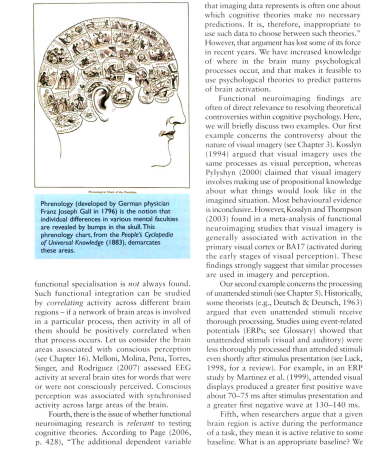
Integration of Cognitive Neuroscience
Modern cognitive psychology increasingly overlaps with neuroscience, and the book reflects this transition effectively.
Eysenck and Keane integrate findings from:
- Brain imaging studies
- Neuropsychology
- Artificial intelligence research
- Cognitive neuroscience experiments
This interdisciplinary perspective strengthens the text considerably because cognition cannot be fully understood without considering brain function.
The discussion of brain regions involved in memory, attention, language, and perception helps readers connect mental processes with biological mechanisms.
Importantly, the neuroscience content enhances rather than overwhelms the psychological discussion. The authors maintain a clear focus on cognition while using neuroscience to deepen understanding.
Strengths of the Book
1. Exceptional Academic Depth
The book provides one of the most thorough introductions to cognitive psychology available at the undergraduate level. It goes beyond surface explanations and develops genuine conceptual understanding.
2. Strong Analytical Framework
Readers are encouraged to evaluate evidence critically instead of memorizing isolated facts. This improves scientific reasoning skills.
3. Comprehensive Coverage
Few cognitive psychology textbooks cover such a broad range of topics with consistent quality. From memory and attention to consciousness and reasoning, the coverage is impressive.
4. Research-Driven Content
The extensive use of experimental evidence gives the material authority and relevance.
5. Updated Editions
Recent editions incorporate modern developments in cognitive neuroscience and contemporary research trends, keeping the book academically current.
Weaknesses and Limitations
Despite its strengths, the book is not without flaws.
1. Demanding for Beginners
Although readable, the text can still feel intellectually heavy for students with no prior psychology background. Some chapters require careful rereading to fully understand.
2. Information Density
The book contains a large amount of theoretical and experimental detail. Readers seeking quick summaries or simplified explanations may find it overwhelming.
3. Limited Informal Engagement
Compared to popular psychology books, the writing style is more academic than conversational. It prioritizes precision over entertainment.
However, these limitations are largely consequences of the book’s academic seriousness rather than genuine weaknesses.
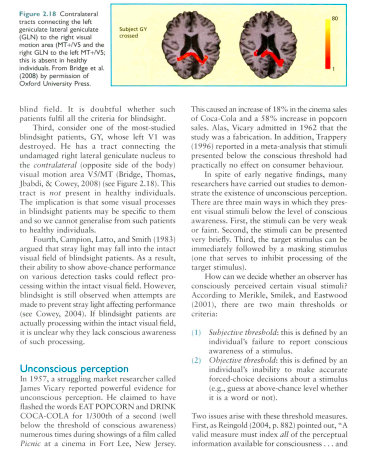
Educational Value and Practical Relevance
The educational value of Cognitive Psychology is substantial. Students who engage seriously with the text gain a strong understanding of how mental processes operate scientifically.
The book also has practical relevance beyond the classroom. Topics explored in the text apply to:
- Education and learning strategies
- Human-computer interaction
- Artificial intelligence
- Clinical psychology
- Eyewitness testimony and legal systems
- Decision-making in business and daily life
Readers begin to understand why humans make errors, how memory can be distorted, and how attention influences perception and behavior.
This practical dimension makes the material intellectually rewarding as well as academically useful.
Comparison With Other Cognitive Psychology Textbooks
Compared with many introductory textbooks, Eysenck and Keane offer significantly greater analytical sophistication.
For example:
- More detailed than simplified survey textbooks
- More balanced in evaluating theories
- Stronger integration of neuroscience
- Greater emphasis on critical analysis and research methodology
Compared with books like Goldstein’s Cognitive Psychology, Eysenck and Keane are often viewed as slightly more theoretical and academically rigorous, whereas Goldstein may feel somewhat more accessible for absolute beginners.
Both are excellent, but Eysenck and Keane particularly appeal to readers seeking deeper conceptual understanding.
Who Should Read This Book?
This book is best suited for:
Psychology Students
Especially undergraduate and postgraduate students studying cognition, neuroscience, or experimental psychology.
Serious Self-Learners
Readers with strong intellectual curiosity about the human mind.
Researchers and Educators
Useful as both a teaching text and reference source.
Competitive Exam Students
Helpful for advanced psychology examinations requiring conceptual clarity.
Final Verdict: An Outstanding Academic Resource
Cognitive Psychology by Michael W. Eysenck and Mark T. Keane remains one of the finest textbooks in modern cognitive science education.
Its combination of analytical rigor, scientific depth, balanced evaluation, and comprehensive coverage makes it far more than a standard university textbook. It is a serious intellectual exploration of how the human mind works.
While demanding at times, the effort required to read the book is rewarded with genuine understanding. Rather than offering simplified answers, the authors guide readers through the complexity, uncertainty, and excitement of cognitive psychology as a scientific discipline.
For students who want more than memorized definitions—for those who want to understand cognition critically and scientifically—this book remains an essential and highly valuable resource.
Conclusion
In the rapidly evolving field of cognitive psychology, few textbooks have maintained their authority and relevance as successfully as Cognitive Psychology by Eysenck and Keane. Its careful structure, evidence-based analysis, and intellectual honesty continue to make it a cornerstone of psychology education worldwide.
The book succeeds not because it simplifies cognition, but because it explains complexity with clarity. That achievement is what makes it enduringly important in both academic and professional psychology.
Available Formats
EPUB
Book Innformation In Point
- Book Title: Cognitive Psychology
- Authors:
- Michael W. Eysenck
- Mark T. Keane
- Subject: Cognitive Psychology
- Genre: Academic / University Psychology Textbook
- Language: English
- First Published: 1990
- Publisher: Psychology Press / Taylor & Francis (varies by edition)
- Book Level: Undergraduate and postgraduate psychology students
Download Method Cognitive Psychology
By Clicking on the below download button, you will initiate the downloading process of Cognitive Psychology by Michael W. Eysenck & Mark T. Keane.The book is available in both ePub and PDF format with a single click, moreover we offer unlimited books for downloading without any spams, bombardment of ads. Flyers and needless links. Your support in regard to sharing with friends, family members, colleagues are always welcome. Do not forget to share your ideas and thoughts in the comment section.
You may also like
Cognitive Psychology by E. Goldstein PDF Download
How Learning Works by Marsha C. Lovet & More PDF Download
Educational Psychology by Anita Woolfolk PDF Download
Snow Crash by Neal Stephenson PDF Download