
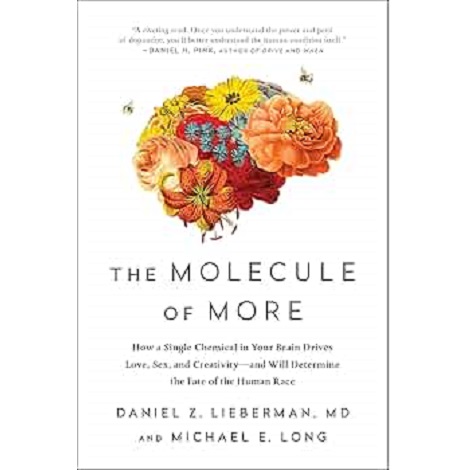
The Molecule of More by Daniel Z. Lieberman is one of the most engaging and thought-provoking popular psychology books published in recent years. Co-written with Michael E. Long, the book explores a deceptively simple but powerful idea: much of human behavior is driven by dopamine, the brain chemical associated with desire, motivation, anticipation, and possibility.
Unlike many neuroscience books that drown readers in technical jargon, The Molecule of More translates complex psychological and biological concepts into accessible, compelling, and deeply relatable insights. The authors do not merely explain how dopamine works; they show how it quietly shapes nearly every aspect of human life — from love and creativity to politics, addiction, ambition, and technological progress.
What makes the book particularly effective is its balance between scientific explanation and practical relevance. Lieberman combines clinical expertise with storytelling, historical examples, and everyday observations to create a work that feels both educational and personally meaningful.
Rather than presenting dopamine as simply a “pleasure chemical,” the book reveals it as something far more influential and paradoxical: a force that pushes humans toward the future while often preventing satisfaction in the present.
A Central Idea That Changes How Readers See Human Behavior
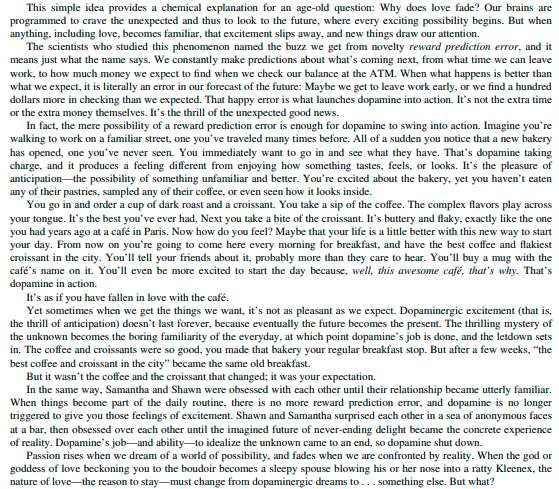
The core argument of The Molecule of More is surprisingly elegant. According to Lieberman, dopamine is not primarily responsible for pleasure itself. Instead, it fuels the pursuit of pleasure. It drives people to seek what comes next — the next achievement, the next relationship, the next discovery, or the next reward.
This distinction is crucial because it reframes many common assumptions about happiness and motivation.
The book argues that dopamine thrives on anticipation rather than possession. Once humans achieve what they desire, dopamine activity declines, and attention shifts toward new possibilities. This neurological mechanism explains why people often struggle to feel satisfied even after accomplishing major goals.
Lieberman demonstrates how this process influences:
- Romantic attraction
- Career ambition
- Political ideology
- Drug addiction
- Consumer culture
- Creativity and innovation
- Social media behavior
- Risk-taking
- Gambling and compulsive habits
The concept is both intellectually stimulating and emotionally revealing. Readers begin recognizing dopamine-driven behavior everywhere — not only in society but within themselves.
The Science Made Accessible Without Oversimplification
One of the book’s greatest strengths is its accessibility. Neuroscience and psychology books often fall into one of two traps: they become overly technical or excessively simplistic. The Molecule of More manages to avoid both.
Lieberman explains brain chemistry with impressive clarity while maintaining scientific credibility. Complex neurological systems are broken down into understandable ideas without losing nuance.
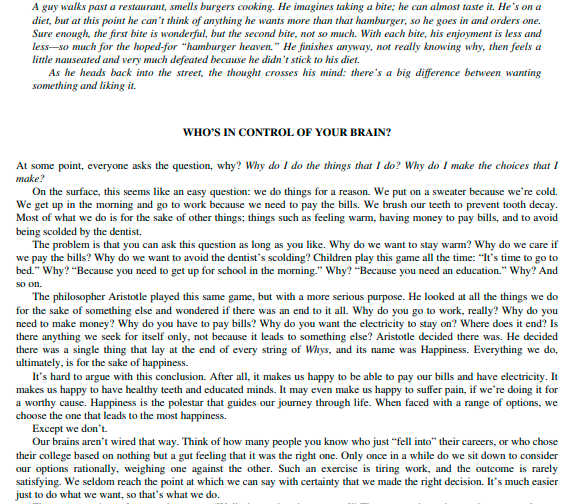
The authors divide human experience into two broad systems:
- The dopamine system, which focuses on future possibilities, goals, and desire
- The “here-and-now” system, which values present experiences, emotional connection, and contentment
This framework allows readers to understand internal conflicts that define modern life. Humans constantly oscillate between wanting more and appreciating what they already possess.
The explanations feel intuitive because the authors consistently connect neuroscience to recognizable experiences. Whether discussing falling in love, pursuing status, or endlessly scrolling through social media, the science always feels grounded in real life.
Importantly, Lieberman avoids presenting dopamine as inherently good or bad. Instead, the book emphasizes its dual nature. Dopamine fuels civilization’s greatest achievements, but it also contributes to dissatisfaction, obsession, and destructive behavior.
A Remarkably Broad Exploration of Human Life
Many psychology books become repetitive because they apply one concept to only a narrow range of topics. The Molecule of More succeeds because its central thesis extends naturally into many dimensions of human behavior.
The book explores how dopamine shaped human evolution by motivating early humans to search for food, shelter, and opportunity beyond immediate surroundings. That same neurological mechanism now drives scientific innovation, technological advancement, and economic growth.
At the same time, Lieberman argues that modern society often overstimulates dopamine systems in unhealthy ways. Social media platforms, digital entertainment, advertising, and addictive substances exploit the brain’s craving for novelty and anticipation.
The discussion of addiction is particularly insightful. Rather than portraying addiction solely as moral weakness or lack of discipline, the book explains it as a hijacking of the brain’s motivational circuitry. Dopamine’s intense focus on future rewards can overpower rational decision-making and emotional well-being.
Equally compelling are the chapters on relationships and romance. Lieberman explains why early romantic excitement often fades over time and how long-term emotional intimacy depends less on dopamine and more on present-centered attachment systems.
This perspective may challenge some readers, but it also offers a more mature understanding of love and human connection.
Political and Social Insights That Spark Reflection
One of the most ambitious sections of The Molecule of More examines the relationship between dopamine and political ideology. Lieberman suggests that differences in dopamine activity may partially influence how people approach change, stability, risk, and innovation.
According to the book, individuals who are more dopamine-oriented tend to favor novelty, transformation, and future possibilities. Those who rely more heavily on present-focused systems may prioritize tradition, stability, and social cohesion.
While some readers may disagree with certain political interpretations, the discussion remains intellectually stimulating because the authors avoid simplistic partisan arguments. Instead, they attempt to explain why different personality types naturally gravitate toward different worldviews.
The broader social commentary throughout the book is equally compelling. Lieberman raises important questions about consumer culture and modern technology:
- Why do people constantly chase success yet remain dissatisfied?
- Why are digital platforms so addictive?
- Why does wealth often fail to produce lasting happiness?
- Why do ambitious individuals sometimes sacrifice relationships and well-being?
These questions give the book relevance far beyond neuroscience. It becomes a reflection on the psychological structure of modern civilization itself.
The Book’s Greatest Achievement: Self-Recognition
Perhaps the most powerful aspect of The Molecule of More is how personally revealing it becomes for readers. The book encourages deep self-reflection without sounding judgmental or preachy.
Many readers will recognize their own patterns in Lieberman’s descriptions:
- The excitement of pursuing goals more than achieving them
- The tendency to idealize future possibilities
- The difficulty of remaining satisfied after success
- The addictive pull of novelty and stimulation
- The constant search for “more”
This self-recognition gives the book emotional resonance beyond its scientific arguments.
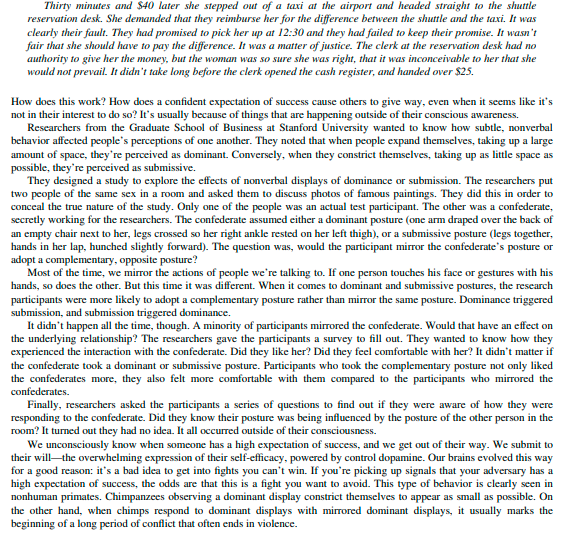
Lieberman does not argue that ambition or desire should be eliminated. On the contrary, he acknowledges that dopamine drives creativity, exploration, scientific discovery, and progress. Human civilization itself depends on restless curiosity and future-oriented thinking.
However, the book warns that a life dominated entirely by dopamine can become emotionally hollow. Endless striving without appreciation for present experiences may lead to chronic dissatisfaction.
The authors ultimately advocate balance — a healthier relationship between ambition and contentment.
Writing Style: Clear, Intelligent, and Highly Engaging
Daniel Lieberman’s writing style deserves considerable praise. Despite dealing with neuroscience and psychology, the book remains highly readable from beginning to end.
The prose is conversational but intellectually sharp. Scientific concepts are explained through stories, analogies, historical examples, and case studies that maintain reader engagement.
The pacing is particularly effective. Each chapter introduces fresh applications of dopamine theory, preventing the central idea from becoming repetitive. The authors move smoothly between biology, philosophy, sociology, economics, and personal psychology.
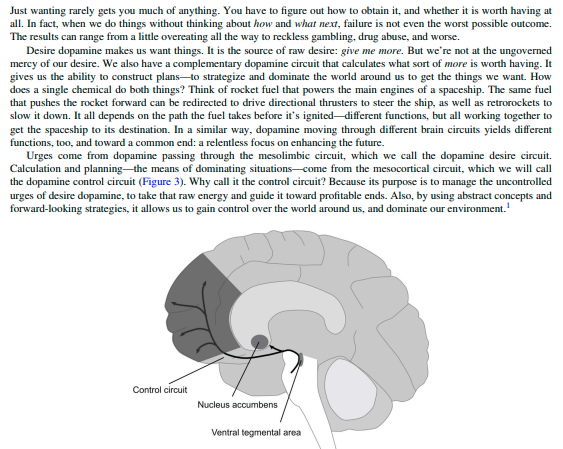
Importantly, Lieberman avoids sensationalism. Many popular psychology books exaggerate scientific findings or promise life-changing formulas. The Molecule of More is more restrained and thoughtful. The authors acknowledge limitations, complexities, and exceptions rather than reducing human behavior to simplistic neuroscience.
This intellectual honesty strengthens the book’s credibility.
Criticisms and Limitations
Despite its many strengths, The Molecule of More is not without flaws.
The book occasionally risks overextending dopamine as an explanatory framework for human behavior. While dopamine undoubtedly plays a major role in motivation and desire, some readers may feel the authors attribute too many social and psychological phenomena to a single neurochemical system.
Human behavior is influenced by countless biological, environmental, cultural, and emotional factors. At times, the book’s arguments can feel overly broad or deterministic.
Additionally, certain political sections may strike readers as speculative. Although the neuroscience behind dopamine is well-supported, linking complex ideological beliefs directly to neurochemistry can seem reductive.
Some critics have also noted that the book occasionally simplifies debates within neuroscience for the sake of readability. Specialists in the field may find parts of the analysis less nuanced than academic literature.
However, these limitations are relatively minor compared to the book’s overall achievement. For a general audience, Lieberman succeeds remarkably well at translating sophisticated scientific ideas into meaningful insights.
Why The Molecule of More Resonates in the Modern World
The enduring relevance of The Molecule of More comes from how accurately it captures the psychological atmosphere of modern life.
Today’s world constantly encourages people to seek more:
- More success
- More productivity
- More followers
- More entertainment
- More possessions
- More experiences
Technology amplifies dopamine-driven behavior by delivering endless novelty and instant stimulation. Social media, online shopping, streaming platforms, and digital notifications all exploit the brain’s motivational systems.
Lieberman’s analysis helps explain why modern societies often struggle with anxiety, burnout, addiction, and chronic dissatisfaction despite unprecedented material comfort.
At the same time, the book offers hope rather than cynicism. By understanding dopamine’s influence, individuals may become more conscious of their motivations and more capable of balancing ambition with presence and fulfillment.
This practical relevance gives the book unusual depth and staying power.
Final Verdict: An Intelligent and Eye-Opening Study of Human Desire
The Molecule of More is an exceptional work of popular psychology that combines neuroscience, philosophy, sociology, and self-reflection into a deeply engaging reading experience.
Daniel Lieberman succeeds in explaining complex scientific ideas with clarity while exploring profound questions about happiness, ambition, addiction, relationships, and human progress. The book challenges readers to reconsider what drives their decisions and why satisfaction can feel so elusive.
Its greatest strength lies in balance. The authors neither glorify nor demonize dopamine. Instead, they present it as a powerful force that fuels both humanity’s greatest achievements and many of its deepest struggles.
While some arguments occasionally stretch too far, the overall analysis remains thoughtful, insightful, and highly relevant to contemporary life.
For readers interested in psychology, neuroscience, behavioral science, or personal growth, The Molecule of More offers far more than entertaining science writing. It provides a new lens through which to understand modern human existence.
Few books explain the restless nature of human desire with such clarity and intelligence.
Details about ”The Molecule of More by Daniel Z. Lieberman & Michael E. Long” PDF
. Name: The Molecule of More
. Authors: Daniel Z. Lieberman & Michael E. Long
. Publish Date: August 14, 2018
. Language: English
. Genre: Cognitive Neuroscience & Cognitive Neuropsychology
. Format: PDF/ePub
. Size: 3.9 MB
. Pages:257
. Price: Free
. Status: Avail for Download
. ISBN: 0446600253
Download ”The Molecule of More by Daniel Z. Lieberman & Michael E. Long” PDF Free.
By Clicking on the below download button, you will initiate the downloading process of The Molecule of More by Daniel Z. Lieberman & Michael E. Long The book is available in both ePub and PDF format with a single click, moreover, we offer unlimited books for downloading without any spams, a bombardment of ads. Flyers and needless links. Your support in regard to sharing with friends, family members, and colleagues is always welcome. Do not forget to share your ideas and thoughts in the comment section. You may also like Never Marry Your Brother’s Best Friend by Lauren Landish PDF Download

EPUB
Related posts:
 Zen and the Brain by James H. Austin PDF Download
 The Man Who Tasted Words by Guy Leschziner PDF Download
 Synaptic Self by Joseph E. LeDoux PDF Download
 Social by Matthew D. Lieberman PDF Download
 The G Factor by Arthur R. Jensen PDF Download
 The Ultimate Husband by Skykissing Wolf (Chapter 1-1260) PDF Free Download
 The Ultimate Husband by Skykissing (1261-1328)
 Beautiful World Where Are You, by Sally Rooney PDF Download
 The Love Hypothesis by Ali Hazelwood ePub Download
 Hlomu The wife by Dudu Busani-Dubev 2 PDF Download