
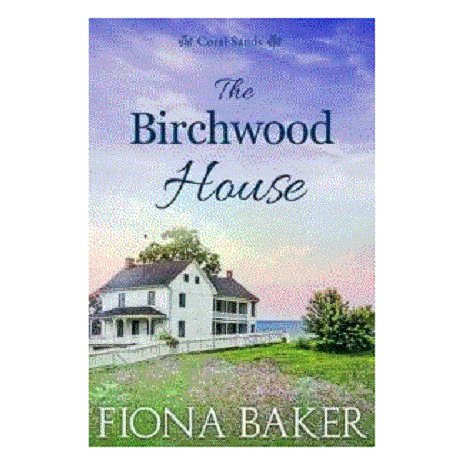
Some books remind us that starting over does not mean starting from nothing. Sometimes, a new beginning comes after everything familiar has fallen apart. It can arrive through heartbreak, financial uncertainty, a career setback, or a family crisis. And sometimes, the unexpected change that initially feels like a disaster turns out to be exactly what a person needs.
Fiona Baker’s The Birchwood House is a warm and uplifting women’s fiction story built around that idea.
Set in the picturesque seaside town of Coral Sands, Maine, the novel brings together three generations of women who find themselves at major turning points in their lives. Audrey Lowe is devastated when her husband disappears, only to discover that he has left her for a younger woman and secretly stopped paying their mortgage. Her adult daughter, Michelle, is dealing with her own difficult transition after losing her job. Just when both women are struggling to figure out what comes next, Audrey’s mother, Elaine, offers them a place to stay in the waterfront mansion she inherited years earlier.
What begins as an emergency solution gradually develops into something much more meaningful.
Audrey, Michelle, and Elaine decide to restore the historic house and eventually consider transforming it into a local hotel. Along the way, they reconnect with one another, rediscover old friendships, become part of the Coral Sands community, and begin imagining futures they never expected to have.
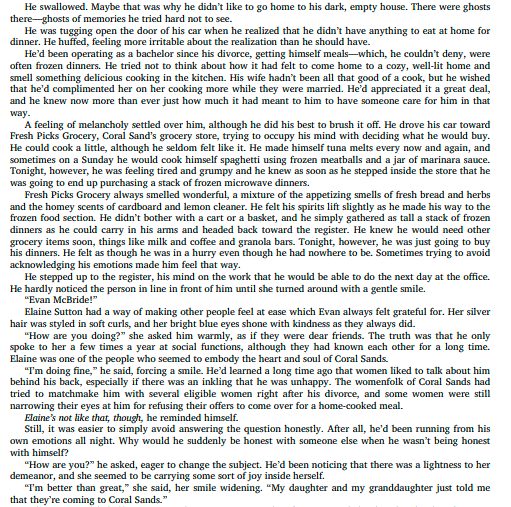
At the center of Audrey’s personal journey is Evan McBride, Coral Sands’ handsome mayor. Their first encounter is anything but smooth, but the attraction between them is difficult to ignore. For Audrey, however, romance is complicated by the betrayal she has just experienced.
The result is a story about rebuilding—not only a house, but also relationships, confidence, dreams, and the belief that happiness can still be found after disappointment.
A Story About the Beauty of an Unexpected New Beginning
One of the strongest aspects of The Birchwood House is its central message: life can change dramatically without necessarily ending the possibility of happiness.
Audrey does not choose the circumstances that bring her to Coral Sands.
Her husband’s disappearance is not simply painful; it changes her entire understanding of the life she thought she had. Discovering that he has left her for someone younger adds another layer of humiliation and betrayal. The fact that he also stopped paying the mortgage leaves Audrey facing an immediate financial crisis.
It would be easy for a story built around this situation to become overwhelmingly bleak.
Instead, Fiona Baker uses the crisis as the starting point for transformation.
Audrey is forced to leave behind the life she thought she understood. Although that process is painful, it also allows her to reconsider what she actually wants.
That is what makes the story so relatable.
Life rarely follows the plans people make. Careers change. Relationships end. Children grow up. Parents age. Homes are sold or lost. The future can suddenly look completely different.
The Birchwood House acknowledges those realities while offering a hopeful alternative: sometimes the life that comes after a major setback can be just as meaningful—and perhaps even more fulfilling—than the life that came before.
Three Generations, One New Beginning
The three-generation family dynamic is arguably the heart of the novel.
Audrey, Michelle, and Elaine are at different stages of life, yet all three women have reasons to reconsider their futures.
Audrey is recovering from betrayal and the collapse of her marriage.
Michelle is trying to determine what comes next after losing her job.
Elaine has the mansion and its history, but she also becomes part of the family’s new chapter.
Bringing these women together creates an opportunity to explore how different generations understand family, independence, responsibility, and change.
Their situation also provides the story with an important emotional advantage.
Audrey’s recovery does not happen in isolation.
She has people around her.
Michelle is experiencing her own difficulties, so mother and daughter can understand each other’s uncertainty in ways they might not have been able to before.
Elaine provides another perspective, reminding them that life does not have to follow a single timeline.
The result is a family story that feels larger than the central romance.
The Emotional Importance of Family
Family is not simply a supporting element in The Birchwood House. It is one of the novel’s central themes.
Audrey’s marriage may have fallen apart, but her family becomes a source of stability.
That distinction is important.
The book does not suggest that romantic relationships are the only relationships capable of providing fulfillment. Instead, it emphasizes the importance of having people who stand beside you when life becomes difficult.
The relationship between Audrey, Michelle, and Elaine gives the story much of its warmth.
Their decision to work together on the mansion is also symbolic. They are not simply restoring an old building. They are creating something new from what already exists.
In many ways, that mirrors Audrey’s emotional journey.
She cannot erase what happened to her.
But she can decide what she does next.
Coral Sands: The Perfect Setting for a Fresh Start
A charming seaside town is almost irresistible as a setting for women’s fiction, and Coral Sands provides exactly the kind of atmosphere this story needs.
Located on the coast of Maine, the town offers a refreshing contrast to the turmoil Audrey has experienced.
The move to Coral Sands represents more than a change of address.
It is a psychological reset.
Audrey arrives carrying heartbreak, financial anxiety, and uncertainty about her future. Yet the town gives her opportunities to reconnect with people from her past and develop relationships in the present.
The small-town setting also allows the story to explore one of the most enjoyable aspects of this genre: community.
In a close-knit town, people become more than neighbors.
They become friends, supporters, business partners, and sometimes unexpected sources of romance.
That sense of community makes Coral Sands feel like more than a backdrop.
It becomes part of the healing process.
The Birchwood House as a Symbol
The historic waterfront mansion is perhaps the most important symbol in the story.
At first, it is simply a place to live.
Then it becomes a project.
Eventually, it becomes a potential business and a shared dream.
That transformation mirrors the women themselves.
The house has history, but it is not trapped in the past.
It can be restored.
It can be given a new purpose.
It can become something different without losing the qualities that made it special.
Audrey’s journey works in much the same way.
She has experienced something that changed her permanently. But being changed does not mean being broken.
Like the house, she can rebuild.
She can preserve the parts of herself that matter while creating something new.
That is one of the most satisfying ideas running through the premise.
From Heartbreak to Independence
Audrey’s emotional journey is particularly compelling because her challenge is not simply getting over a man.
She has to rediscover herself.
When someone has been part of a long-term marriage, losing that relationship can create questions about identity. Who am I now? What do I want? What does my future look like? Can I trust someone again?
Audrey has to confront those questions.
Her husband’s betrayal could easily convince her that romance is too risky.
That makes her attraction to Evan McBride especially interesting.
She is not simply deciding whether she likes him.
She is deciding whether she is ready to trust her heart again.
That is a much more emotionally significant question.
Evan McBride and the Possibility of Romance
Evan McBride, the mayor of Coral Sands, brings a lighter and more romantic element to Audrey’s story.
Their first meeting is described as a clumsy encounter, and his charming personality immediately leaves Audrey flustered.
That kind of beginning gives their relationship a playful quality.
After the pain Audrey has experienced, it is refreshing to see the possibility of attraction abruptly enter her life.
But the romance does not need to move quickly.
In fact, Audrey’s hesitation makes the potential relationship more believable.
She has been betrayed.
She has every reason to be cautious.
Evan therefore has to become more than an attractive man who catches her attention. He needs to become someone Audrey can trust.
That creates an appealing romantic tension.
The question is not simply whether Audrey and Evan are attracted to each other.
The real question is whether Audrey can allow herself to believe that a healthy and happy relationship is still possible.
Why Audrey’s Romantic Journey Feels Relatable
Audrey’s hesitation will likely resonate with many readers.
Heartbreak can make people protective of themselves.
Even when someone new appears who seems kind and appealing, emotional wounds do not disappear simply because another person enters the picture.
That is why Audrey’s journey feels more meaningful than a simple “woman meets handsome man” storyline.
She needs time.
She needs reassurance.
Most importantly, she needs to rebuild confidence in herself.
The romance therefore becomes part of a larger journey of healing.
Evan may offer her a new possibility, but Audrey ultimately has to decide for herself whether she is ready to take it.
The Hotel Dream Adds a Fresh Layer to the Story
The idea of transforming the mansion into a local hotel is another particularly enjoyable aspect of the premise.
It gives the women something concrete to work toward.
Rather than simply spending the novel recovering from their respective problems, Audrey, Michelle, and Elaine begin building something together.
That creates momentum.
The house restoration also provides an opportunity for the characters to learn new things, face practical challenges, make decisions, and develop a shared sense of purpose.
The hotel idea can also bring more people into their lives, strengthening the connection between the family and the Coral Sands community.
Most importantly, the project represents possibility.
They are not simply fixing an old house.
They are creating a future.
A Feel-Good Story Without Ignoring Heartbreak
One of the appealing qualities of The Birchwood House is the balance between emotional difficulty and optimism.
Audrey’s situation is genuinely painful.
Her husband’s disappearance, infidelity, and financial betrayal are not small problems.
Michelle’s job loss adds another layer of uncertainty.
Yet the story does not allow those circumstances to define the women permanently.
Instead, hardship becomes the catalyst for change.
That approach makes the novel uplifting without making the characters’ problems meaningless.
The message is not that painful experiences do not matter.
It is that painful experiences do not have to determine the rest of your life.
That is a powerful message for women’s fiction.
Themes of Friendship and Community
Romance and family are important, but friendship also plays a role in Audrey’s new life.
Her return to Coral Sands allows her to reconnect with childhood friends.
That detail adds another emotional dimension to the story.
There is something comforting about returning to a place where people remember who you were before life became complicated.
Old friends can remind us of parts of ourselves we may have forgotten.
For Audrey, reconnecting with people from her earlier life may help her rediscover the person she was before marriage, betrayal, and disappointment changed her circumstances.
The small-town environment strengthens that theme.
Coral Sands is a place where relationships matter, and Audrey gradually becomes part of that community again.
What Makes The Birchwood House Stand Out?
The book’s greatest strength is its combination of several comforting themes.
It is a romance, but it is also a family story.
It is about starting over, but it is also about restoring something old.
It explores heartbreak, but it focuses on hope.
And although Audrey’s romantic future is important, the story does not make romance the only source of happiness.
That balance makes the book particularly suitable for readers who enjoy women’s fiction with romantic elements.
The three-generation family is another distinctive feature.
Audrey, Michelle, and Elaine each bring their own perspective, making the story about more than one woman’s recovery.
Their shared project gives them a common goal while allowing each character to experience her own personal transformation.
The Best Thing About the Book
The best thing about The Birchwood House is its message that it is never too late to rebuild your life.
Audrey’s story begins with betrayal and loss, but she does not remain defined by what happened to her.
The move to Coral Sands gives her a chance to reconnect with family, rediscover friendships, consider a new business venture, and perhaps even open her heart to love again.
The mansion itself beautifully represents that journey.
A historic house that needs restoration becomes a symbol of three generations of women restoring their own sense of purpose and connection.
That parallel gives the story an emotional quality that goes beyond a typical romance.
Why Readers Will Enjoy The Birchwood House
Readers who enjoy warm, uplifting women’s fiction are likely to find plenty to appreciate here.
The novel offers:
- A charming coastal Maine setting
- A strong three-generation family dynamic
- A woman rebuilding her life after betrayal
- A second-chance-at-life theme
- A potential new romance
- Small-town friendships and community
- A historic mansion with plenty of character
- A family business idea
- Emotional healing and personal growth
- A hopeful, feel-good tone
The story is particularly well suited to readers who enjoy books where the emotional journey is just as important as the romantic one.
Is The Birchwood House Worth Reading?
Yes, especially for readers who enjoy uplifting women’s fiction with romance, family, and small-town charm.
The novel’s premise offers an appealing escape to Coral Sands while still giving its characters meaningful challenges.
Audrey’s story is relatable because her problems are rooted in experiences many readers understand: relationship breakdown, financial uncertainty, career changes, family responsibilities, and the fear of starting over.
What makes the story comforting is the way those challenges are balanced by friendship, family, community, and possibility.
Readers looking for an intensely dramatic thriller or a plot-heavy mystery may want something different.
But those searching for a cozy, emotionally satisfying story about women finding their footing after difficult life changes should find The Birchwood House a rewarding choice.
The Best Thing About The Birchwood House
The best thing about The Birchwood House is its uplifting message about rebuilding your life after heartbreak and finding happiness in unexpected places. Fiona Baker beautifully combines family, friendship, romance, and new beginnings through Audrey, Michelle, and Elaine’s journey in Coral Sands. The historic house also adds a meaningful layer to the story, symbolizing how both a home and a family can be restored, renewed, and given a fresh purpose.
Why Do Readers Read The Birchwood House?
Readers choose The Birchwood House for its heartwarming blend of family, romance, friendship, and second chances. Fiona Baker creates an uplifting story for anyone who enjoys watching characters rebuild their lives after difficult experiences.
Readers are especially drawn to:
- A charming coastal Maine setting in Coral Sands
- A fresh romantic possibility between Audrey and Evan
- Three generations of women supporting one another
- Themes of starting over and personal growth
- The restoration of a historic waterfront house
- Friendship and small-town community
- A warm, feel-good story about healing after heartbreak
- Hope, resilience, and finding happiness again
Overall, readers enjoy the book because it offers a comforting escape while reminding them that a difficult ending can become the beginning of something beautiful.
Book Information
Final Verdict
Fiona Baker’s The Birchwood House is a warm and hopeful story about what happens when life forces you to begin again.
Audrey Lowe’s world falls apart when her husband disappears and leaves her facing betrayal and financial uncertainty. Her daughter Michelle is also dealing with a major life setback, and neither woman knows exactly what the future holds.
Then Elaine offers them a place in her historic waterfront mansion in Coral Sands.
What follows is more than a change of scenery.
It is a transformation.
Three generations of women begin restoring the old house while rebuilding their family relationships and creating a new dream together. The possibility of turning the mansion into a hotel gives them purpose, while Audrey’s reconnection with old friends helps her feel rooted in the community once again.
And then there is Evan McBride.
The handsome mayor offers Audrey a glimpse of something she is not sure she is ready to risk: love.
The emotional heart of the story lies in that uncertainty.
Can Audrey move beyond the betrayal she experienced?
Can she trust again?
Can she accept that her life might become something better than what she originally planned?
The Birchwood House answers those questions with warmth and optimism.
Its central message is simple but powerful: a broken chapter does not mean the story is over.
Sometimes the biggest changes arrive disguised as disasters.
Sometimes losing the life you thought you wanted gives you the freedom to discover the life you actually need.
And sometimes, the best place to begin again is somewhere unexpected—a beautiful coastal town, surrounded by family, old friends, new possibilities, and perhaps one charming mayor who makes your heart beat a little faster.
Final Recommendation
If you are looking for a comforting women’s fiction read about family, friendship, romance, resilience, and fresh beginnings, The Birchwood House is an inviting choice.
Fiona Baker’s story reminds readers that starting over can be frightening, but it can also be liberating. Audrey’s journey from betrayal and uncertainty toward friendship, family, purpose, and the possibility of love gives the novel its emotional appeal.
Coral Sands feels like the kind of fictional town readers will want to visit, while the Birchwood House itself becomes a symbol of everything the characters are trying to rebuild.
Most importantly, the novel leaves readers with an encouraging thought: it is never too late to create a new version of your life—and sometimes the unexpected road leads somewhere better than the one you originally planned.
Download Method: The Birchwood House by Fiona Baker
By clicking on the download button below, you will initiate the downloading process of The Birchwood House by Fiona Baker. The book is available in both ePub and PDF formats with a single click; moreover, we offer unlimited books for download without any spam or ad bombardment. No flyers and needless links. Your support in sharing with friends, family members, and colleagues is always welcome. Do not forget to share your ideas and thoughts in the comment section.
You may also like
The Lie That Stole Christmas by Theresa Paolo PDF Download
The Cowboy and the Baby by Katie J. Cross PDF Download
Aiden & Lily by Natalie Dean PDF Download
Lethal Bliss by Cleo Noir PDF Download

EPUB
Related posts:
 Hopes and Dreams at The Chocolate Pot Café by Jessica Redland PDF Download
 The Paradise Fling by Tara Lush PDF Download
 LONELYCOLLEGEBOY BY J. ALLEN GRADY PDF Download
 Broken Boy by Marion De Ré PDF Download
 REAL LOVE BY RACHEL LINDSAY PDF Download
 A PLAY FOR LOVE BY M.S. PARKER PDF Download
 Ain’t She Sweet? by Susan Elizabeth Phillips PDF Download
 Ander & Santi Were Here by Jonny Garza Villa PDF Download
 Forever Fated by Ginny Sterling PDF Download
 Love Me Good by Lila Dawes PDF Download